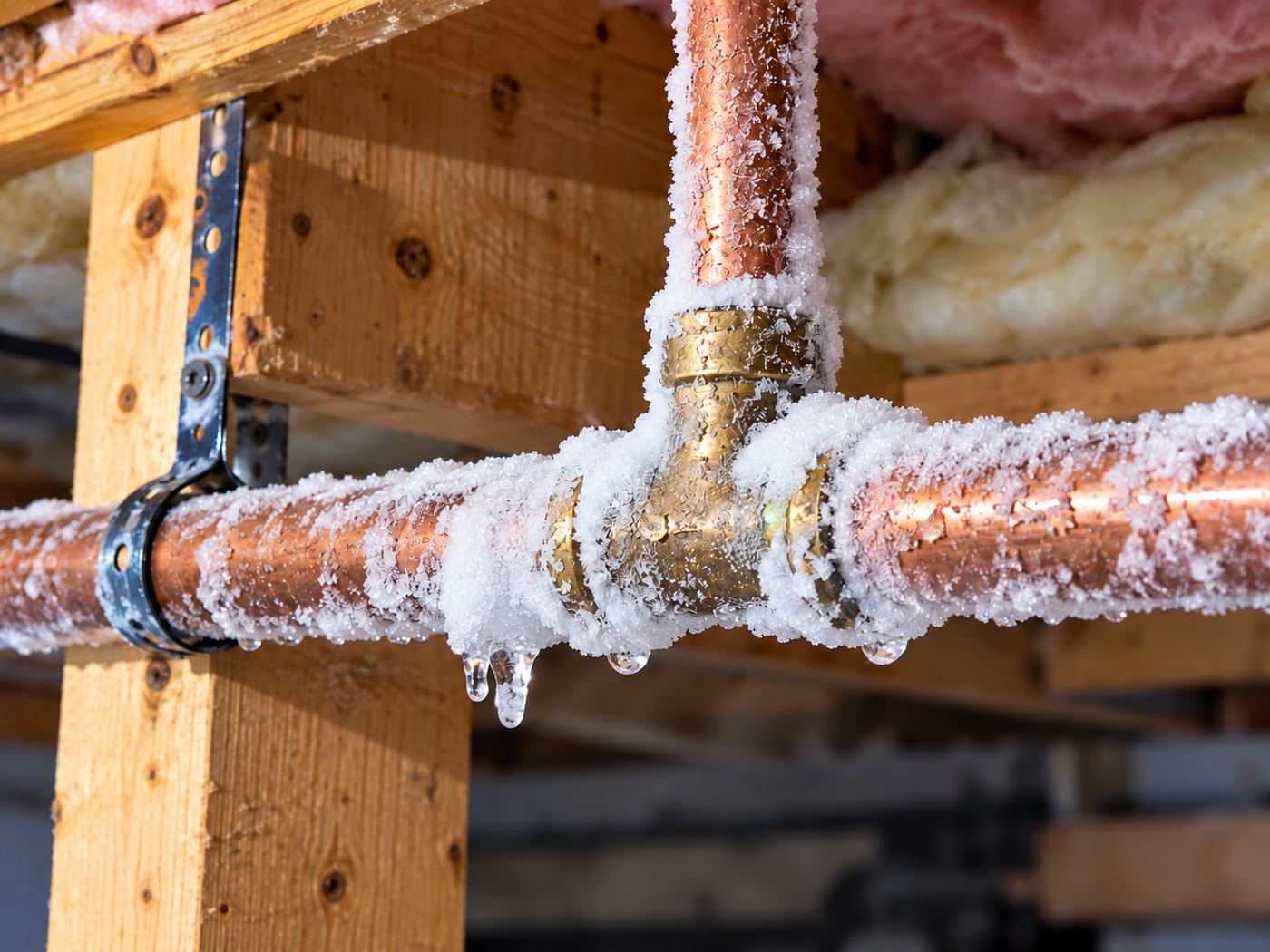
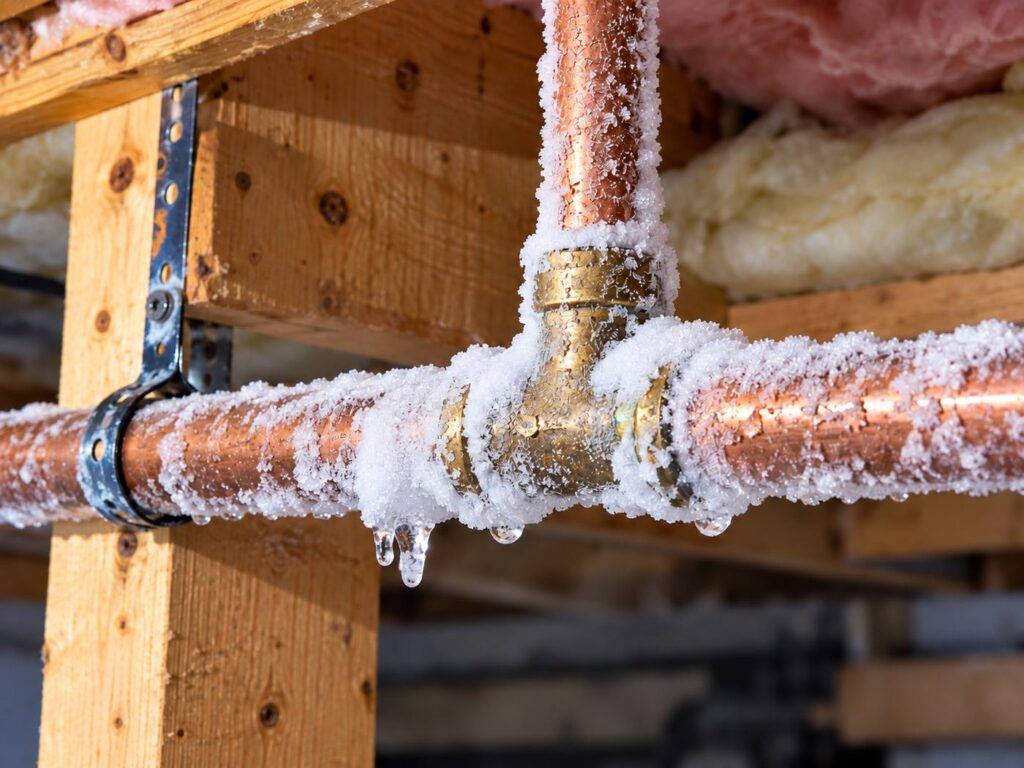
Pipes can burst in winter because water expands as it freezes. That expansion increases pressure inside plumbing and can eventually crack or split the pipe. Pipes exposed to severe cold or located in poorly heated spaces are especially vulnerable.
For homeowners on Long Island and in Rockland County, the best time to think about frozen pipes is before a prolonged cold spell. A few preventive steps can reduce the chance of waking up to no water, a frozen line, or a leak after a pipe thaws.
Why do pipes burst when they freeze?
Water takes up more space when it freezes. Inside a confined pipe, that expansion creates pressure that the pipe or its fittings may not be able to withstand. Both metal and plastic pipes can break under enough pressure.
The break is not always obvious while the pipe is still frozen. Ice can temporarily block water flow. Once the frozen section begins to thaw, water may escape through a crack that formed during the freeze.
That’s why a frozen pipe should be treated as a plumbing problem even when you don’t see active leaking yet. Universe provides plumbing repair if a pipe should happen to burst.
Which pipes are most likely to freeze?
The highest-risk pipes are usually those exposed to cold air or separated from the heated living space.
Several common vulnerable locations include:
- outdoor hose bibs and exterior water lines;
- basements and crawl spaces;
- attics;
- garages;
- kitchen or bathroom cabinets;
- pipes running against exterior walls with little insulation.
Local housing conditions can change where those weak points appear. On Long Island, older suburban homes may have plumbing routed through basements, garages, or exterior walls. Rockland County homes can face inland winter cold and repeated freeze-thaw conditions. Those differences do not change the basic prevention strategy: pay closest attention to plumbing that sits outside the home’s consistently heated envelope.
How can you prevent frozen pipes?
Start by reducing cold exposure and keeping water moving when temperatures become especially severe.
Before freezing weather arrives:
- Disconnect outdoor hoses. Drain and store garden hoses, and prepare outdoor hose connections according to the plumbing setup.
- Insulate vulnerable plumbing. Pipe sleeves or other appropriate insulation can help protect exposed water lines.
- Check unheated spaces. Look at plumbing in garages, crawl spaces, basements, attics, and beneath sinks.
- Keep garage doors closed when water-supply lines run through the garage.
- Know where your main water shutoff is before you need it.
During very cold weather, open kitchen and bathroom cabinet doors so warmer indoor air can circulate around plumbing. It’s also a good idea to allow cold water to drip from a faucet served by exposed pipes. Even a small amount of flow can help reduce freezing risk.
If the same pipe has issues every winter, a temporary fix may not address the cause. That’s a good time to schedule an inspection with Universe to determine whether insulation, repair, or another permanent change makes sense.
Should you turn the heat down at night or while traveling?
Avoid large temperature reductions when pipes are at risk of freezing.
During severe cold, the Red Cross recommends keeping the thermostat at the same setting during the day and at night rather than lowering it significantly overnight. If you leave home during cold weather, it recommends leaving the heat on and setting the thermostat no lower than 55°F.
That does not mean every home has identical plumbing exposure. A pipe in a poorly insulated exterior wall may be more vulnerable than one running through a heated interior space.
Before traveling in winter, consider which plumbing areas are coldest in your home and whether anyone will be available to check the property if temperatures drop sharply.
How can you tell if a pipe may already be frozen?
One common warning sign is greatly reduced water flow.
If you turn on a faucet during freezing weather and only a trickle comes out, suspect a frozen pipe. Likely locations include plumbing along exterior walls or near where the water service enters the home.
Other clues can include:
- no water from one fixture while others still work;
- an exposed pipe that feels unusually cold;
- frost or ice on accessible plumbing;
- a problem that begins during or immediately after a period of severe cold.
Do not assume the first frozen pipe you find is the only one. When one vulnerable line freezes, other exposed pipes may be at risk too.
How should you thaw a frozen pipe safely?
If the frozen section is accessible and there is no sign of a burst, use controlled heat rather than an open flame.
Keep the affected faucet open and gently warm the frozen section with methods such as:
- an electric heating pad wrapped around the pipe;
- an electric hair dryer;
- towels soaked in hot water.
Never use a blowtorch, charcoal stove, kerosene or propane heater, or another open flame device to thaw plumbing.
Continue gentle warming until normal water pressure returns. If you cannot locate the frozen area, cannot safely reach it, or cannot thaw it, contact a licensed plumber.
What should you do if a frozen pipe bursts?
If water starts escaping from a cracked or split pipe, stop the flow as quickly as you safely can.
Knowing the location of the main water shutoff can make a major difference in how much water continues entering the home. After the water is shut off, the damaged section needs professional evaluation and repair.
Do not enter standing water if electrical equipment, outlets, wiring, or appliances may be energized nearby.
Universe offers 24/7 emergency plumbing services because not all plumbing issues can wait. The damage from a plumbing failure compounds by the minute.
What should you check before the next cold spell?
A short winter plumbing check can focus on the places where freezing is most likely.
Before temperatures fall:
- disconnect outdoor hoses;
- look for exposed plumbing in cold spaces;
- add appropriate pipe insulation where needed;
- close garage doors around plumbing;
- confirm the location of the main water shutoff;
- remember which pipes have frozen before;
- plan how you will keep vulnerable plumbing warmer during severe cold.
Long Island and Rockland County have different local housing and winter conditions, but the prevention principle is the same: protect plumbing from prolonged cold before ice has a chance to form.
If a pipe freezes repeatedly, water flow drops during cold weather, or you discover damaged plumbing, schedule service now rather than waiting for a full rupture
Frequently Asked Questions
Why do pipes burst in winter?
Pipes can burst in winter because water expands when it freezes. That expansion puts pressure on the pipe and can cause metal or plastic plumbing to crack or break. Pipes exposed to severe cold or located in unheated areas are at greater risk.
Which pipes are most likely to freeze?
Pipes most likely to freeze include outdoor water lines and plumbing in basements, crawl spaces, attics, garages, cabinets, and poorly insulated exterior walls. The Red Cross recommends identifying and protecting these vulnerable locations before freezing weather begins.
How can I prevent my pipes from freezing?
Frozen pipe prevention includes disconnecting outdoor hoses, insulating exposed plumbing, keeping garage doors closed around water lines, and allowing warm air to reach pipes beneath sinks. During very cold weather, the Red Cross also recommends letting cold water trickle from faucets served by exposed pipes.
What temperature should I leave my house at when I travel in winter?
The Red Cross recommends leaving the heat on and setting the thermostat no lower than 55°F when you are away during cold weather. Homes differ in insulation and plumbing exposure, so especially vulnerable pipes may need additional preparation.
How can I tell if a pipe is frozen?
A frozen pipe may cause a faucet to produce only a trickle or no water during freezing weather. Pipes along exterior walls and plumbing near the point where water enters the foundation are common places to check. Other exposed plumbing may also be frozen, so check additional faucets.
How should I thaw a frozen pipe?
A frozen pipe should be thawed using controlled heat, such as an electric heating pad, hair dryer, or towels soaked in hot water. Keep the faucet open while warming the pipe. Never use a blowtorch or another open-flame device. If you cannot locate or safely reach the frozen section, call a licensed plumber.
What should I do if a frozen pipe bursts?
A burst pipe requires stopping the water flow as quickly as it can be done safely. Use the main water shutoff if appropriate, keep away from standing water that may involve electrical hazards, and arrange professional repair.