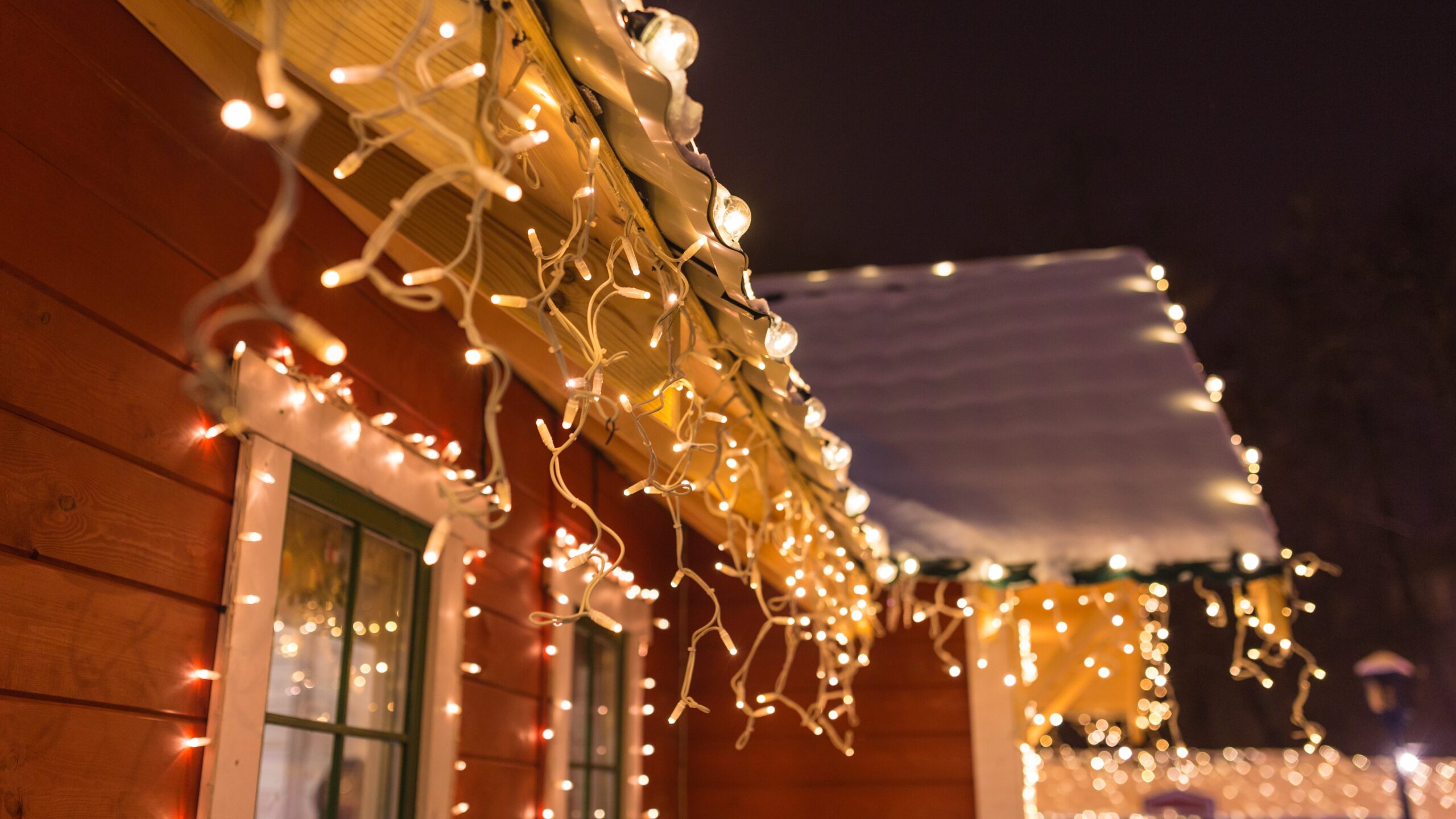
Holiday decorating often means more lights, appliances, cords, heaters, and devices sharing your home’s electrical system.
The safest approach is simple: inspect equipment before use, follow product ratings, avoid overloading circuits, and take recurring warning signs seriously.
For Long Island and Rockland County homeowners, winter conditions can add another layer of concern. Some Long Island communities may deal with wet coastal conditions, while Rockland County is better framed by inland cold and freeze-thaw weather. Universe provides electrical services to both Long Island and Rockland county homes.
What should you check before holiday power use increases?
Start with every decoration, cord, outlet, and portable device you plan to use.
Inspect:
- light strings;
- extension cords;
- power strips;
- wall receptacles;
- outdoor decorations;
- countertop appliances; and
- portable space heaters.
Look for:
- frayed insulation;
- loose plugs;
- broken sockets;
- damaged cords;
- scorch marks or discoloration; or
- equipment that is not rated for where you plan to use it.
Homeowners should only extension cords rated for their intended purpose and outdoor lighting designed for outdoor conditions.
If holiday equipment is damaged, remove it from service rather than taping, modifying, or working around the problem.
How can you avoid overloaded outlets and circuits?
Follow the electrical ratings on lights, cords, strips, appliances, and connected equipment.
A power strip can provide more receptacles, but it does not increase the capacity of the circuit serving that outlet.
Good habits include:
- Follow manufacturer connection limits.
- Avoid daisy-chaining extension cords.
- Spread high-demand equipment appropriately.
- Stop adding load if a breaker repeatedly trips.
- Unplug equipment if a plug, outlet, or strip becomes unusually warm.
Signs that the setup or circuit may need attention include:
- repeated breaker trips;
- warm receptacles or switches;
- buzzing, crackling, or sizzling;
- discoloration;
- lights dimming noticeably when other equipment starts; or
- loose plugs that no longer fit securely.
Repeated breaker trips are not something to work around by resetting the breaker and continuing to add load.
How should holiday lights and extension cords be used safely?
Use lights and cords according to their ratings and treat extension cords as temporary equipment.
For holiday lights:
- inspect sets before installation;
- replace products with damaged wiring or sockets;
- follow manufacturer limits for connected strings;
- use outdoor-rated products outdoors; and
- turn decorations off when they are unattended or everyone is asleep.
For extension cords:
- match the cord rating to the equipment;
- use outdoor-rated cords outside;
- do not connect extension cords together;
- keep cords out from under rugs and furniture;
- avoid pinching them in doors or windows; and
- never remove a grounding pin.
There is no useful universal answer to how many holiday light strings can be connected together. The safe number depends on the specific product, connection limits, wattage, built-in protection, and circuit capacity.
If the same room depends on temporary cords every holiday season, a permanent electrical solution may be worth considering.
If holiday power use repeatedly trips breakers or highlights a lack of usable outlets, explore Universe’s electrical services
What should you know about outdoor decorations?
Outdoor decorations should be designed for outdoor use and connected through appropriate GFCI protection.
Outside:
- use outdoor-rated lights and cords;
- keep connections away from standing water;
- protect cords from doors, windows, and sharp edges;
- inspect equipment after storms or strong wind; and
- follow manufacturer connection limits.
Can space heaters use extension cords or power strips?
No. Portable space heaters should be plugged directly into an appropriate wall receptacle.
ESFI warns that extension cords and power strips can overheat when used with portable heaters.
Also:
- keep heaters at least three feet from combustible materials;
- place them on a level surface;
- follow the manufacturer’s instructions;
- turn them off when leaving the room; and
- do not operate them while sleeping.
Holiday gatherings can increase the number of rooms and appliances in use, but temporary wiring should not become the solution for inadequate permanent capacity.
What electrical warning signs need professional attention?
Recurring problems involving heat, damaged wiring, breaker trips, or unusual electrical behavior should be evaluated rather than worked around.
Call for professional service when you notice:
- breakers that repeatedly trip;
- warm outlets or switches;
- buzzing, crackling, or sizzling;
- sparking;
- burning odors;
- scorch marks or discoloration;
- damaged permanent wiring;
- loose receptacles;
- repeated flickering under load; or
- heavy reliance on adapters and temporary cords for normal use.
Safety note: If there is active smoke, fire, or dangerous sparking, move away from the hazard and contact emergency services as appropriate rather than continuing to troubleshoot.
When does an electrical repair or upgrade make sense?
An electrical repair may be enough when the issue is isolated and the existing electrical system still meets the home’s needs.
A broader upgrade may deserve consideration when the concern involves:
- recurring circuit overload;
- inadequate panel capacity;
- aging or damaged wiring;
- too few permanent receptacles;
- outdated or missing protective devices; or
- a need for additional dedicated circuits.
Older Long Island homes may have wiring designed for lower household electrical demand. Rockland County also includes a mix of older homes and newer development, so the right recommendation depends on the actual home rather than the market name alone.
The key is to evaluate the existing system before deciding whether a focused repair or broader upgrade makes sense.
What affects electrical service cost?
Electrical cost depends on the scope of work and the condition of the existing system.
Potential cost drivers include:
- replacing one outlet versus adding a new circuit;
- troubleshooting time;
- wiring access;
- panel capacity;
- number of devices;
- installation complexity; and
- permit or inspection requirements where applicable.
What should be on your holiday electrical safety checklist?
Keep the final review short:
Lights and Decorations
- Inspect cords and sockets.
- Remove damaged equipment.
- Follow product connection limits.
- Turn decorations off when unattended.
Extension Cords
- Match the rating to the equipment.
- Keep cords temporary.
- Use outdoor-rated cords outside.
- Do not run cords under rugs or furniture.
Outdoor Power
- Use appropriate GFCI protection.
- Keep connections away from standing water.
- Protect cords from physical damage.
Space Heaters
- Plug directly into wall receptacles.
- Keep combustible materials at a safe distance.
- Turn heaters off when unattended.
Home Electrical System
- Do not ignore repeated breaker trips.
- Watch for warm outlets, buzzing, or damaged wiring.
- Have recurring problems professionally evaluated.
Holiday power use should work within the home’s electrical capacity, not depend on temporary fixes.
If holiday power use reveals recurring breaker, outlet, or wiring problems, schedule electrical service with Universe today
Frequently Asked Questions
How can I avoid overloaded circuits during the holidays?
Homeowners can reduce holiday circuit overload by limiting how many devices share one outlet and following each product’s electrical rating. A power strip gives you more receptacles, but it does not increase circuit capacity. Repeated breaker trips are a reason to stop adding load and have the system checked.
What are signs of an overloaded outlet?
Signs of a possible overloaded outlet include unusual warmth, buzzing, crackling, repeated breaker trips, or visible damage. Warm outlets and switches and unusual electrical noises are all warning signs.
Are extension cords safe for holiday decorations?
Extension cords can be used for holiday decorations when they are properly rated, undamaged, and used temporarily. Extension cords should not replace permanent wiring or be run under rugs, through doors, or through walls.
Should outdoor holiday lights use GFCI protection?
Outdoor holiday lights should use outdoor-rated equipment and GFCI-protected power.
Can a space heater be plugged into a power strip?
A space heater should plug directly into a wall outlet rather than a power strip or extension cord. ESFI warns that extension cords and power strips can overheat when used with portable heaters.
Should holiday lights be turned off overnight?
Holiday lights and other electrical decorations should be turned off before leaving home or going to sleep.
When should Long Island or Rockland County homeowners call an electrician during the holidays?
Long Island and Rockland County homeowners should call an electrician when holiday power use reveals repeated breaker trips, warm outlets, sparking, damaged wiring, or other persistent electrical problems.