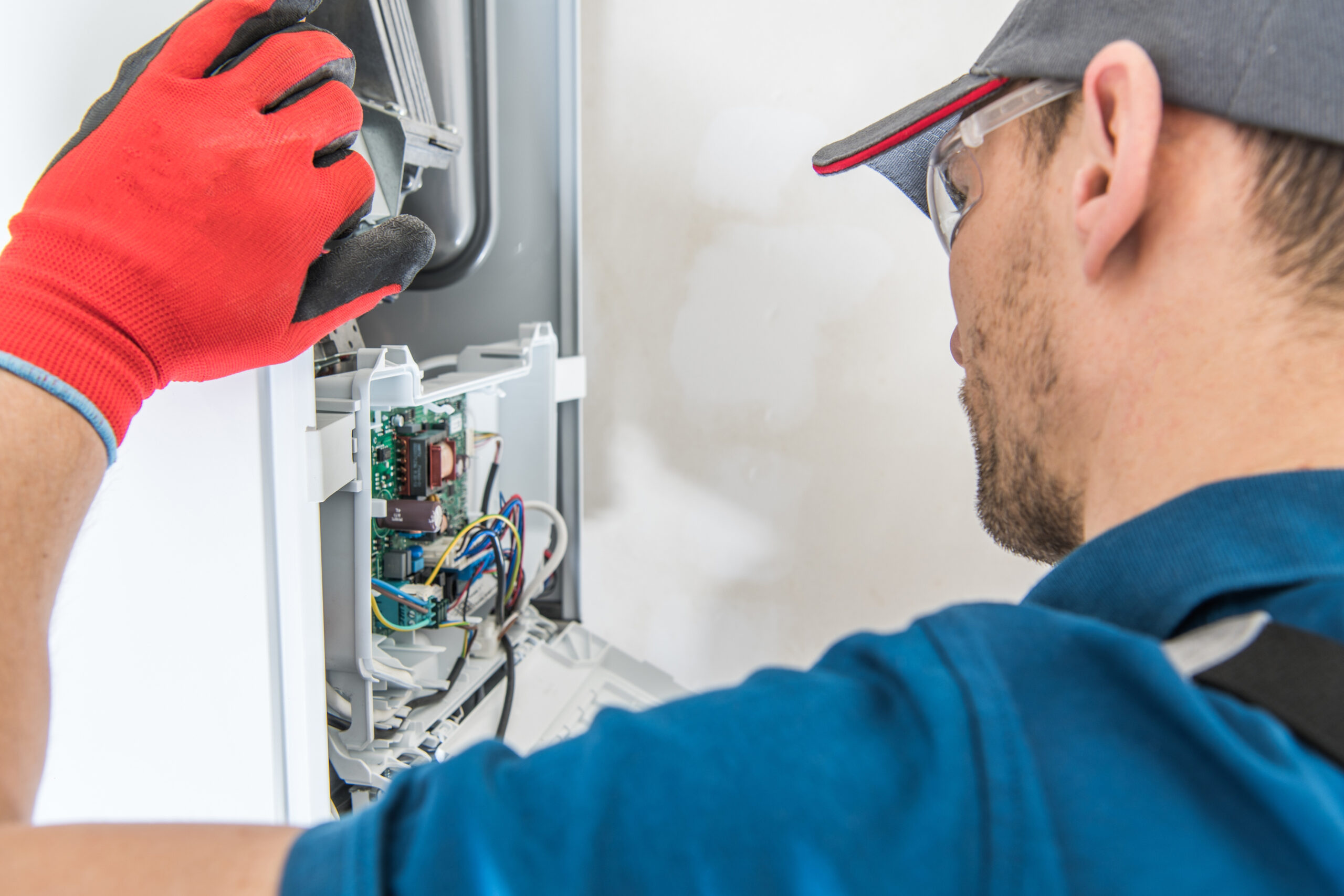
The right furnace contractor should be able to prove applicable credentials, inspect the full heating system, explain the recommendation clearly, provide a detailed written scope, and describe what happens after the work.
For New City homeowners, local verification matters. Rockland County requires people performing covered home improvement work to obtain a county home improvement license. The New York Attorney General also advises homeowners to verify required licenses and obtain proof of insurance before hiring a contractor.
Use these five checks before hiring a furnace contractor in New City, NY.
1. Can the contractor show applicable credentials and insurance?
A reliable New City furnace contractor should provide credentials and insurance that can be verified before work begins.
Ask the company for:
- Its legal business name
- Rockland County home-improvement license number
- Proof of current insurance
- Relevant trade credentials
- The name of the person supervising the project
- Information about any subcontractors
- An explanation of who will obtain permits
Rockland County states that people performing covered home improvement work must obtain a county home improvement license. Its consumer protection office also provides contractor licensing and enforcement resources.
What should you verify?
- The license belongs to the same legal business named in the proposal.
- The license is current.
- The insurance documents are current.
- The stated credentials apply to the proposed work.
- The contractor is permitted to perform work in the property’s jurisdiction.
A manufacturer or industry certification may indicate training, but it does not automatically replace a required county, municipal, or trade license.
2. Does the contractor inspect the complete heating system?
A dependable furnace contractor should evaluate the furnace and connected parts of the home before recommending a major repair or replacement.
A useful assessment may include:
- Furnace condition
- Burner and ignition components
- Safety controls
- Thermostat operation
- Electrical supply
- Gas, oil, or other fuel connections
- Venting
- Supply and return ducts
- Airflow
- Filter condition
- Visible corrosion
- Maintenance history
- Room-by-room comfort concerns
A furnace may appear to be the problem when the main issue is related to:
- Restricted airflow
- Duct leakage
- A thermostat or control
- A dirty filter
- Incorrect equipment sizing
- Poor insulation
- Air leakage
- A failing supporting component
A contractor should explain what was inspected and which findings support the recommendation.
3. Does the contractor explain repair and replacement options?
A good furnace contractor should explain the diagnosis in plain language and show why repair or replacement fits the home.
The explanation should cover:
- What is wrong
- What caused the recommendation
- Whether the furnace can operate safely
- Which repair is proposed
- Whether other reasonable options exist
- What could happen if the work is delayed
- Whether replacement addresses a larger system problem
- Which assumptions affect the estimate
When may furnace repair make sense?
Repair may be reasonable when:
- The failure is limited
- The furnace is otherwise dependable
- Replacement parts remain available
- The duct system is serviceable
- The repair is expected to restore normal operation
- A new furnace would not solve a broader comfort problem
When should replacement receive a closer look?
Replacement may deserve consideration when:
- Repairs are becoming frequent
- A major component is failing
- Parts are difficult to obtain
- The furnace no longer heats the home evenly
- Venting or fuel-system changes are needed
- Ductwork requires major modification
- A renovation changed the heating load
- The homeowner wants to reconsider heating and cooling together
Equipment age can inform the discussion, but it should not be the only reason for recommending replacement.
Universe offers a comprehensive range of furnace services tailored to meet the needs of New City residents
4. Does the contractor provide a detailed written estimate?
A reliable furnace contractor should provide a written scope that allows the homeowner to understand and compare the proposed work.
The New York Attorney General states that home improvement contracts should include project details such as the work, materials, approximate schedule, and payment terms.
A furnace proposal should identify:
- Legal business name
- Contact information
- License information
- Furnace make and model, if selected
- Equipment capacity
- Efficiency rating
- Included labor
- Duct modifications
- Fuel-line or venting work
- Electrical work
- Thermostat or control work
- Permit responsibilities
- Removal and disposal
- Startup and testing
- Warranty terms
- Payment schedule
- Estimated timing
- Exclusions
- Possible change-order conditions
A one-line total makes it difficult to determine whether two proposals include the same work.
5. Does the contractor explain permits, warranties, and follow-up?
A dependable furnace contractor should explain how the project will be permitted, tested, documented, and supported.
Ask:
- Does this project require a permit?
- Who will obtain it?
- Will an inspection be required?
- How will the new or repaired furnace be tested?
- Which manufacturer warranty applies?
- Is there a separate labor warranty?
- How are warranty claims handled?
- What maintenance will the system need?
- Who should be contacted if the problem returns?
- Which documents will the homeowner receive?
A final furnace check may include:
- Thermostat response
- Heating cycles
- Airflow
- Temperature rise
- Fuel and venting operation
- Electrical readings
- Safety controls
- Duct connections
- Startup documentation
How useful are furnace contractor reviews?
Furnace contractor reviews can reveal service patterns, but reviews should not replace license, insurance, contract, and scope verification.
Look for repeated comments about:
- Clear communication
- Accurate estimates
- Diagnosis quality
- Worksite care
- Change-order handling
- Billing
- Warranty support
- Follow-up
Do not rely only on:
- A review count
- One highly positive review
- One highly negative review
- Testimonials controlled by the contractor
- Ratings that do not identify the service or location
Reviews are more useful when combined with:
- Verified credentials
- Written proposals
- References
- Insurance documentation
- Complaint history checks
What warning signs should New City homeowners notice?
High pressure sales, missing documentation, and unclear recommendations are reasons to pause before hiring a furnace contractor.
Potential warning signs include:
- A license that cannot be verified
- No proof of insurance
- A verbal-only estimate
- Pressure to approve work immediately
- A demand for full payment upfront
- No equipment details
- No explanation of the diagnosis
- Avoiding permit questions
- Promising exact savings without a home evaluation
- Vague warranty terms
- Recommending replacement without inspecting the ducts or controls
- Claiming that one furnace fits every home
The New York Attorney General advises homeowners to verify required licenses and insurance before hiring a home improvement contractor.
What questions should you ask before hiring?
Questions for a New City furnace contractor should reveal how the company verifies, diagnoses, prices, and supports its work.
Ask:
- What Rockland County license applies?
- Where can I verify it?
- Can you provide proof of insurance?
- Who will perform or supervise the work?
- What did you inspect?
- What caused the problem?
- Is repair a reasonable option?
- Why are you recommending replacement?
- How was the furnace size selected?
- What duct, fuel, venting, and electrical work is included?
- Are permits or inspections required?
- Who obtains the permit?
- What could cause a change order?
- Which warranties apply?
- How will the furnace be tested?
- What maintenance will it need?
- Who handles follow-up?
The answers should be specific enough to compare with another proposal.
What is the practical next step?
The practical next step is to verify the contractor, compare written scopes, and confirm that the proposed furnace work fits the home.
Compare whether each proposal includes the same:
- Furnace
- Capacity and efficiency
- Labor
- Ductwork
- Fuel work
- Venting
- Electrical work
- Controls
- Permits
- Disposal
- Testing
- Warranty
- Follow-up
Have more questions about furnace repair, installation, or maintenance service? Schedule an in-home consultation with Universe today.
Frequently Asked Questions
How do I choose a furnace contractor in New City, NY?
Choosing a furnace contractor in New City starts with verifying a Rockland County home improvement license, insurance, experience, written scope, and follow-up process. The contractor should also explain the diagnosis, permits, equipment sizing, and warranties.
Do furnace contractors need a license in Rockland County?
Furnace contractors performing covered home improvement work in Rockland County must meet the county’s licensing requirements. Rockland County states that people performing home improvement work must obtain a county home improvement license. Additional trade or municipal requirements may apply.
What should a New City furnace contractor inspect?
A New City furnace contractor should inspect the furnace and relevant connected systems before recommending major work. The assessment may include ducts, airflow, controls, thermostat, electrical supply, fuel connections, venting, safety controls, and room-comfort concerns.
What should a furnace installation estimate include?
A furnace installation estimate should identify the equipment, capacity, efficiency, labor, ducts, fuel work, venting, electrical work, controls, permits, disposal, testing, warranties, payment schedule, and exclusions. New York consumer guidance recommends a detailed written contract for home improvement work.
Is the lowest furnace estimate the best choice?
The lowest furnace estimate is not automatically the best choice because proposals may include different equipment and supporting work. Homeowners should compare capacity, efficiency, ducts, venting, electrical work, permits, testing, warranties, and exclusions.
How important are furnace contractor reviews?
Furnace contractor reviews can reveal patterns in communication, diagnosis, billing, workmanship, and follow-up. Reviews should be considered with licensing, insurance, references, complaint history, and a detailed written proposal rather than used as the only hiring factor.