Yes, your HVAC system can make spring allergies feel worse when it keeps moving pollen, dust, and other particles through your home instead of helping remove them. On Long Island, that problem can show up fast in spring, when outdoor pollen rises, windows start opening, and homes shift toward cooling season before humid summer weather settles in.
If your allergies feel stronger indoors than outside, your heating and cooling system is worth a closer look. A clogged filter, weak airflow, dirty components, or duct issues can all play a role. That does not always mean you need a major upgrade. In many homes, a tune-up, better filter strategy, or indoor air quality improvement is the smarter first step.
Can your HVAC system really make spring allergies worse?
Yes, an HVAC system can worsen spring allergy symptoms when it recirculates airborne particles and the system is not filtering or moving air well. The EPA says portable air cleaners and HVAC filters can help improve indoor air quality, but they do not remove every pollutant and they work best as part of a broader approach.
That matters in older Nassau and Suffolk homes, where return-air layouts, aging ductwork, or overdue maintenance can make airflow less consistent. In some Long Island areas, coastal air and salt exposure may also add wear over time to equipment and components near the shore.
If your Long Island home feels dusty, stuffy, or harder to keep comfortable during allergy season, review your HVAC and indoor air quality options with Universe. Schedule service now.
What signs suggest your system needs attention before summer?
A system often needs attention before summer when allergy symptoms get worse indoors, airflow feels uneven, or the home starts feeling dusty and stuffy.
Common signs include:
- More sneezing, itchy eyes, or congestion when the AC runs
- Dust building up quickly around vents
- A filter that looks dark or clogged sooner than expected
- Rooms that feel muggy or have weak airflow
- Musty odors when the system turns on
- A system that has not had seasonal maintenance yet
These signs do not prove the HVAC system is the only cause of allergy symptoms, but they are reasonable clues that the system may be contributing. For many Long Island homeowners, spring is the right time to catch these issues before heavy summer run time begins.
How can HVAC maintenance help reduce allergens in spring?
HVAC maintenance can help reduce allergens in spring by improving filtration, airflow, and overall system performance.
During a tune-up, a technician may inspect:
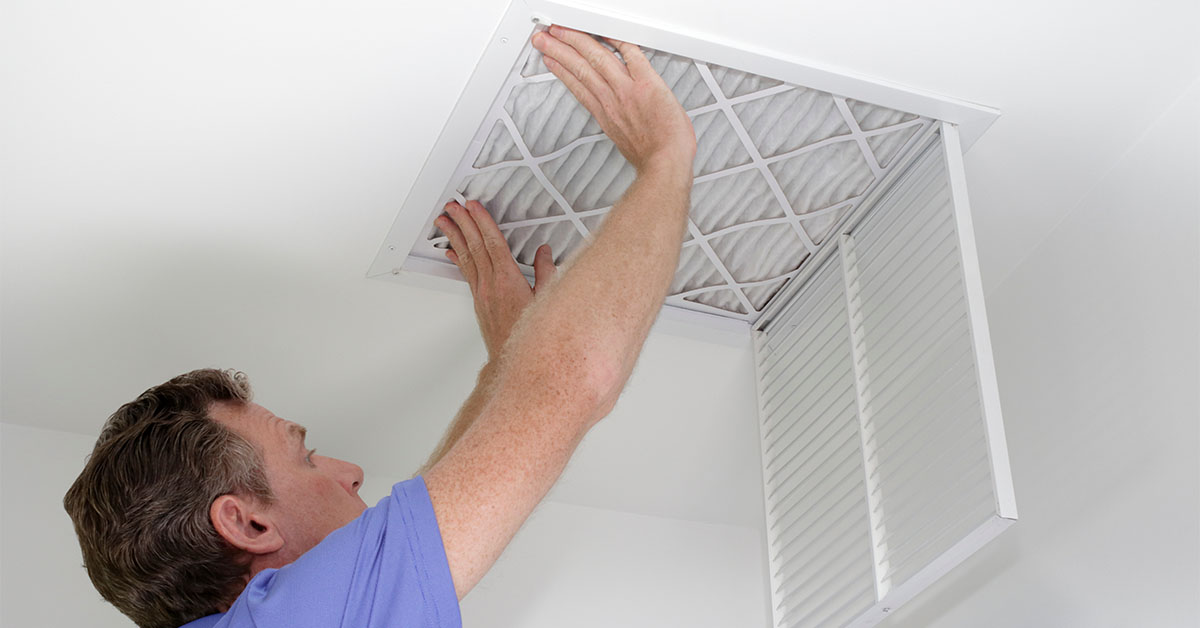
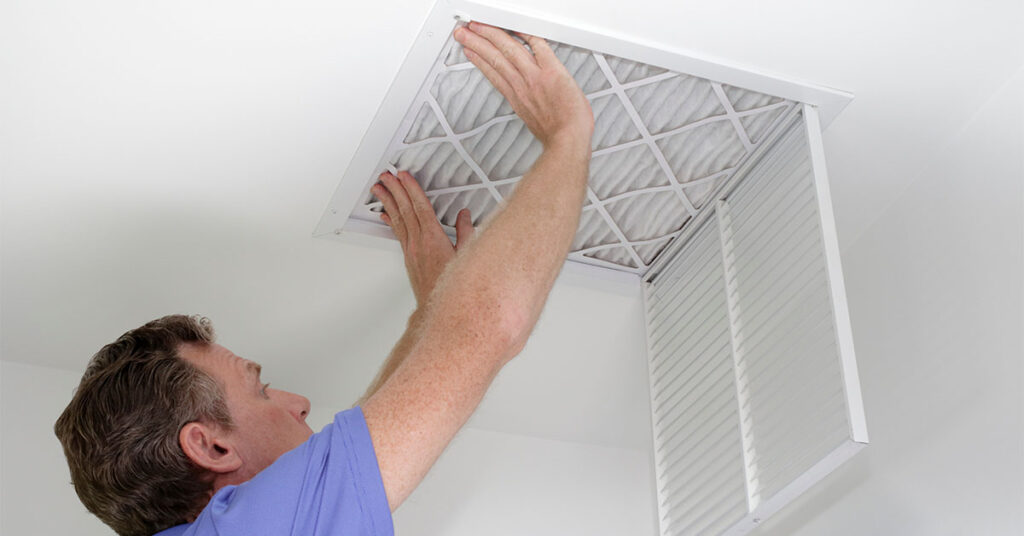
- filter fit
- blower condition
- coil cleanliness
- drainage
- airflow issues that affect how air moves through the home
Those steps can help the system handle airborne particles more effectively, even though they are not a cure for allergies. This is especially useful on Long Island because spring weather can swing between cool nights and warmer afternoons. That stop-and-start use can hide problems until summer humidity makes comfort and air quality issues feel much worse.
Can HVAC filters and air cleaners can help with allergies?
The right HVAC filter and, in some cases, a room or whole-home air purifier or air scrubber can help capture more airborne particles linked to allergy discomfort and improve indoor air quality.
MERV (minimum efficiency reporting value) filter ratings describe how well HVAC filters capture certain particle sizes, while HEPA refers to a different standard commonly used in portable air cleaners.
A true HEPA (high efficiency particulate air) filter can theoretically remove at least 99.97% of particles that are 0.3 microns in size, and higher-MERV HVAC filters can improve particle capture when the system is designed to handle them.
The key is compatibility. A thicker or denser filter is not automatically better if it restricts airflow in your system. That is why homeowners should avoid guessing on filter upgrades. In many cases, the better move is to ask what filter rating your system can support safely and whether a portable or whole-home IAQ option makes more sense.
When should you think about duct or airflow-related fixes?
Duct cleaning or airflow-related fixes make sense when the system is filtering air but comfort and dust patterns still feel off. Uneven room temperatures, weak airflow, visible dust near registers, or persistent stuffiness can point to leakage, poor return-air design, or other distribution problems.
That can come up in older suburban homes across Nassau and Suffolk Counties, where additions, renovations, or older duct layouts may not match the home’s current cooling needs. Duct cleaning is not a blanket answer for every home, but airflow and duct issues are worth evaluating when symptoms keep returning after filter changes and basic maintenance.
What do allergy-related HVAC fixes usually cost on Long Island?
Allergy-related HVAC costs on Long Island usually depend on the scope of the problem, the age of the equipment, the filter setup, and whether you need maintenance, repair, or an IAQ upgrade.
In practice:
- A seasonal tune-up is usually the lowest-cost first step.
- Filter upgrades are usually modest in cost, but only when the system supports them.
- Portable or whole-home air-cleaning equipment costs more because equipment type, sizing, and installation needs vary.
- Duct sealing, airflow corrections, or larger repairs can add cost if access is difficult or the home has older system layouts.
- Full replacement is the biggest investment and depends on efficiency, size, installation complexity, and electrical or duct modifications.
Because Long Island homeowners often feel the pressure of high utility bills, it’s usually smart to start with diagnosis and right-sizing instead of jumping straight to replacement.
When does repair make sense, and when is replacement worth discussing?
Repair usually makes sense when the core system is still in reasonable condition and the allergy-related problem is tied to:
- maintenance
- airflow
- filtration
- a fixable component.
Replacement is more worth discussing when the system has:
- repeated comfort issues
- poor humidity control
- expensive repair needs
- or does not support the level of filtration and performance the home needs
The pros at Universe can present a clear side-by-side comparison to help you determine whether to repair or replace. They will explain what can be improved now, what limits the current system still has, and what benefits a replacement might provide in comfort, efficiency, and indoor air quality.
When should you call a professional on Long Island?
You should call a professional on Long Island when:
- allergy symptoms seem stronger indoors
- airflow is poor
- humidity feels high
- simple filter changes have not helped
An evaluation can help you decide whether the right next step is maintenance, repair, duct improvement, or a broader indoor air quality upgrade.
If your system has not been checked yet this season, it’s a good idea to schedule service before summer arrives and demand increases.
Frequently Asked Questions
Can an HVAC system make spring allergies worse on Long Island?
An HVAC system can make spring allergies worse on Long Island when the system is recirculating pollen, dust, and other airborne particles through a clogged filter or poor airflow setup. EPA says HVAC filters and portable air cleaners can help improve indoor air quality, but they do not remove all pollutants. In Nassau and Suffolk homes, a spring HVAC check can help identify whether the issue is maintenance, filtration, or airflow related.
What HVAC filter is best for allergies?
The best HVAC filter for allergies is the highest-efficiency filter your system can handle without harming airflow. EPA explains that MERV ratings show how well HVAC filters capture certain particle sizes, while HEPA is a different standard more common in portable air cleaners. A Long Island homeowner should match the filter choice to the system, not just buy the densest filter on the shelf.
How often should Long Island homeowners change HVAC filters during allergy season?
Long Island homeowners should check HVAC filters more often during allergy season because spring pollen and dust can load filters faster than usual. The exact change schedule depends on filter type, system use, pets, and indoor air conditions. A practical rule is to inspect the filter regularly in spring and replace it when it is visibly dirty or based on the manufacturer’s guidance.
When should I call an HVAC professional for allergy problems at home?
You should call an HVAC professional for allergy problems at home when symptoms feel worse indoors, the home feels dusty or humid, or filter changes have not improved comfort. Long Island homeowners should also call before summer if the system has not been checked this spring. A professional can help sort out whether the issue is filtration, airflow, duct performance, maintenance, or a larger equipment concern.