Winter on Long Island brings a different kind of cold. Coastal winds, damp air, and aging homes can make it tough to stay comfortable — even when your heating system is running. That’s why many homeowners turn to space heaters during cold snaps.
At Universe Home Services, serving homeowners across Long Island, we see a sharp increase in “no heat” calls during winter storms. And more often than you’d expect, the heating system isn’t broken at all.
The issue is usually a space heater placed too close to the thermostat.
This guide explains the proper use of space heaters, how they affect thermostats and heating systems, and how to stay warm safely — without accidentally stopping your system from turning on.
If your home isn’t staying warm no matter what you do, Universe offers 24/7 emergency heating services.
What Space Heaters Are (and Aren’t) Meant to Do
Space heaters are designed to provide temporary, localized warmth. They work well for:
- Chilly bedrooms
- Drafty living spaces
- Home offices
- Short-term comfort during extreme cold
They are not designed to:
- Replace oil furnaces, gas furnaces, or heat pumps
- Heat an entire home evenly
- Run nonstop throughout the winter
In many Long Island homes — especially older houses with original insulation and single-zone thermostats — improper space heater use can interfere with normal heating operation.
How Thermostats Sense Temperature
Most thermostats measure the temperature of the air directly surrounding the device. They don’t know how cold other rooms may be — only what they sense in one location.
This means;
- Warm air near the thermostat = the system believes the house is warm
- The heating system won’t turn on if the thermostat thinks the set temperature has been met
This is especially important in Long Island homes with:
- Central hallway thermostats
- Single-zone oil heating systems
- Open first floors with closed-off bedrooms
Can a Space Heater Affect a Thermostat?
Yes — a space heater can absolutely affect a thermostat.
If a space heater is:
- Running in the same room as the thermostat
- Positioned too close to it
- Blowing warm air directly toward it
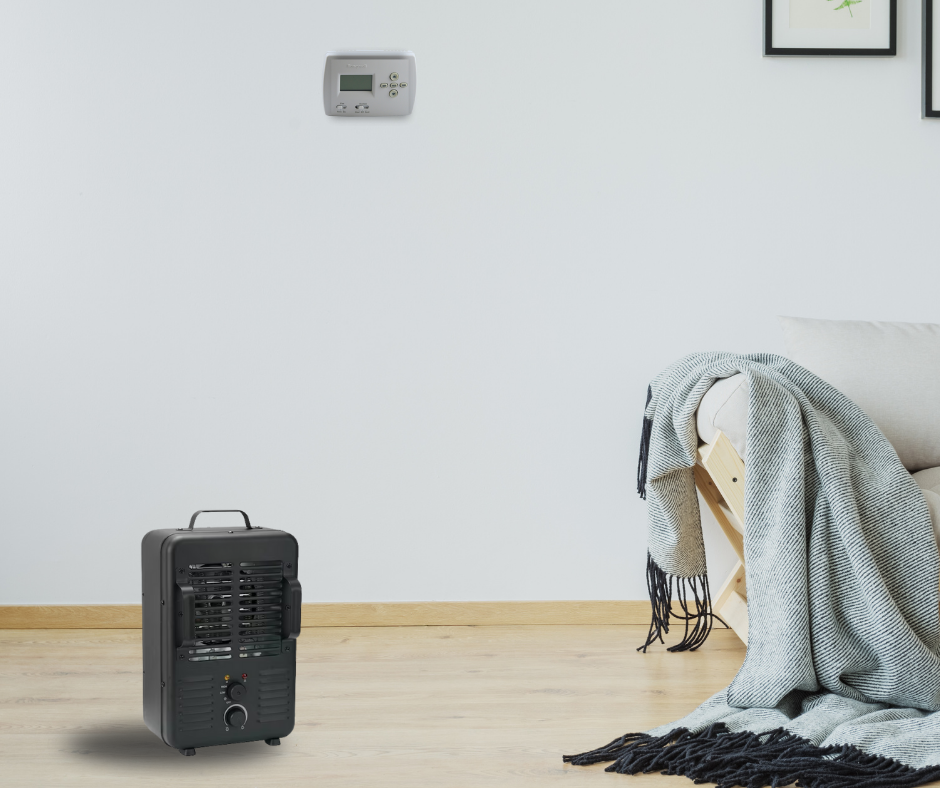
…the thermostat may detect warmer air than the rest of the home. As a result, it assumes the house is warm enough and never signals the heating system to turn on.
Why Your Heating System Isn’t Turning On While a Space Heater Is Running
When your heater doesn’t turn on but a space heater is running, it’s usually because:
- The thermostat has reached its target temperature
- The system is responding correctly
- The temperature reading itself is misleading
In short, your heating system isn’t failing — it’s being misdirected by localized heat.
This scenario is especially common in homes that rely on space heaters daily to offset drafts or uneven heating. If this is the case in your home, it might be time to replace your heating system.
Thermostat Says Heat Is On — But the House Is Still Cold
Before assuming a major heating issue, check these common causes:
- Is a space heater running near the thermostat?
- Is the thermostat located in a room being artificially heated?
- Is the system set to heat (not fan-only)?
- Are some rooms warm while others feel cold?
If a space heater is warming the thermostat area moving it to a different room may restore normal heating.
Space Heater Safety Tips for Long Island Homes
Safety is just as important as comfort — especially during coastal winter storms when heaters may run longer.
Essential space heater safety tips:
- Never leave a space heater unattended
- Keep heaters away from curtains, furniture, and bedding
- Plug heaters directly into wall outlets
- Turn heaters off when sleeping or leaving home
In older Long Island homes with aging electrical systems, improper heater use can increase fire risk and electrical overload. An electrician from Universe can evaluate your electrical panel and help you decide if an electrical panel upgrade is necessary.
Where to Place a Space Heater Safely
Correct placement helps prevent both heating issues and safety hazards.
Good placement:
- Rooms without thermostats
- Flat, stable surfaces
- Areas away from foot traffic
Avoid placing space heaters:
- Near thermostats
- In hallways or stairwells
- Near flammable materials
- In bathrooms or damp spaces
How Far Should a Space Heater Be from a Thermostat?
A space heater should be kept several feet away from a thermostat, and ideally placed in a separate room.
This helps prevent:
- False temperature readings
- Uneven heating
- Heating systems failing to activate
If your home depends heavily on space heaters to stay warm, it’s a strong sign your heating system needs professional attention. The HVAC techs at Universe can determine whether it’s best to repair or replace your system. They can also help you decide what the best system is for your Long Island home.
When to Call a Heating Professional Instead of Using Space Heaters
Space heaters are meant to help temporarily — not serve as a long-term heating solution.
Call a professional HVAC technician if:
- Your home won’t stay warm without space heaters
- Your heating system responds inconsistently
- Some rooms never reach the set temperature
- Energy costs continue to rise
- Safety is a concern
Frequently Asked Questions
Can a space heater cause a thermostat to read the wrong temperature?
Yes, a space heater can cause a thermostat to read the wrong temperature by warming the air directly around it. This can make the thermostat think the home is warmer than it actually is.
Why does my thermostat say it’s warm when parts of my house are cold?
This often happens when the thermostat is influenced by localized heat from a space heater, sunlight, or nearby appliances, instead of reflecting the temperature throughout the home.
Can using a space heater prevent my heating system from turning on?
Yes. If a space heater raises the temperature near the thermostat, the heating system may not turn on because the thermostat believes the set temperature has already been reached.
How far away should a space heater be from a thermostat?
A space heater should be placed several feet away from a thermostat and ideally in a different room to avoid inaccurate readings and heating disruptions.
Where is the safest place to use a space heater?
The safest place to use a space heater is in a room without a thermostat, on a flat surface, and away from furniture, curtains, and bedding.
Is it safe to rely on space heaters throughout the winter?
Space heaters are intended for short-term supplemental use. Relying on them all winter increases fire risk and can hide heating system issues that need professional repair.
Why does my heating work in some rooms but not others?
Uneven heating can result from thermostat placement, airflow problems, zoning issues, or space heaters affecting thermostat readings. A professional inspection can identify the cause.
When should I call a heating professional instead of using space heaters?
You should call a heating professional if your home relies on space heaters for comfort, your heating system behaves inconsistently, or safety and energy concerns arise.