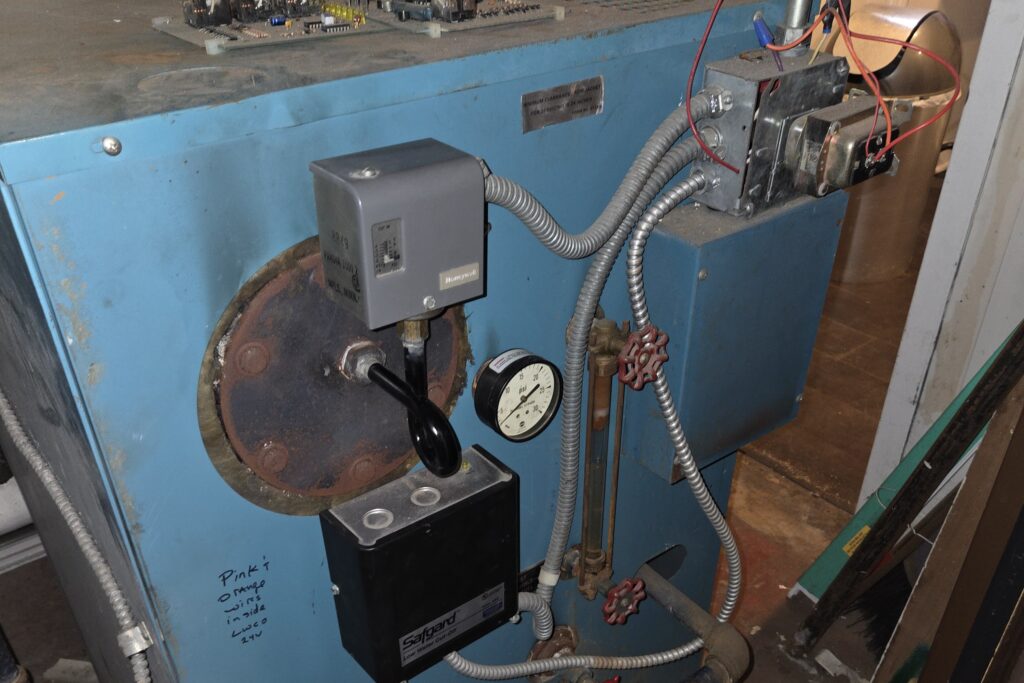
A reliable boiler contractor should be able to show applicable credentials, inspect more than one component, explain the problem clearly, provide written project details, and describe what happens after the work.
That matters before a winter repair, planned replacement, or oil-to-gas conversion. Boiler work can involve heating equipment, controls, water piping, fuel systems, venting, electrical components, and local permit requirements.
For homeowners on Long Island and in Rockland County, contractor requirements can vary by location. The New York Attorney General states that home improvement contractors must be licensed in Nassau, Suffolk, and Rockland Counties. New York law also requires a written contract for home improvement work costing more than $500.
Here are five practical ways to assess a boiler contractor before you approve the work.
1. Can the contractor show the required credentials?
A reliable contractor should provide verifiable credentials that apply to the work and location.
New York does not use one simple statewide general contractor license for every home improvement project. Requirements may come from the county, municipality, or specific trade involved.
Before hiring a boiler contractor, ask for:
- The legal business name
- Applicable home improvement license number
- Relevant plumbing, heating, or trade credentials
- Proof of current insurance
- The name that will appear on the contract
- Information about required permits
- Confirmation that subcontractors are properly qualified
Questions to ask
- Which license applies to this boiler project?
- Where can I verify the license?
- Who will perform or supervise the work?
- Will the project require a permit or inspection?
- Who is responsible for obtaining the permit?
A contractor should not dismiss reasonable credential questions or rely only on a logo, vehicle, or advertisement.
2. Does the contractor inspect the full boiler system?
A reliable boiler contractor should evaluate the equipment and connected system before recommending a repair or replacement.
Boiler symptoms can come from several parts of the heating system.
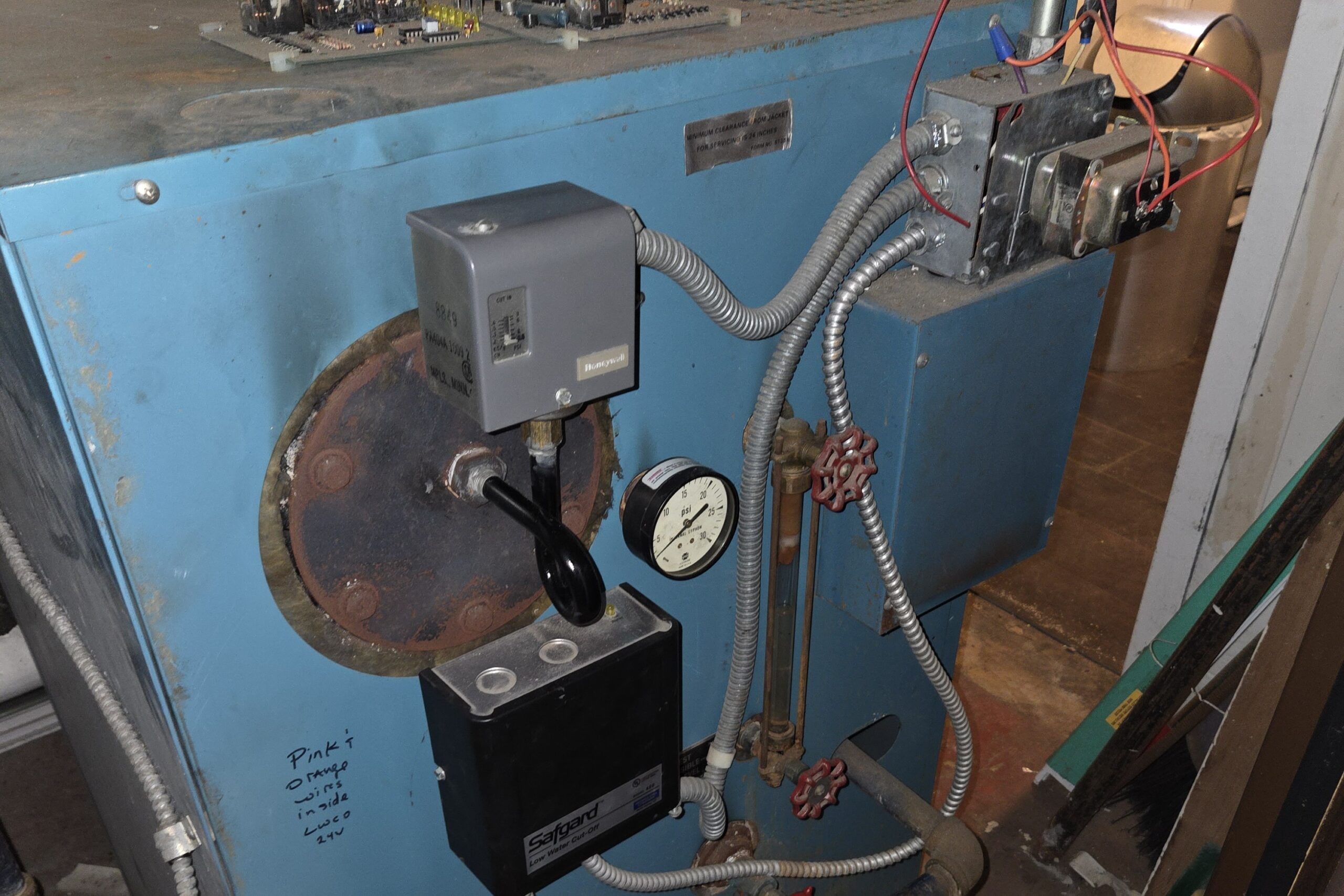
A useful inspection may include:
- The boiler
- Burner and controls
- Circulator pumps
- Zone valves
- Expansion tank
- Pressure and temperature readings
- Visible piping
- Radiators or baseboards
- Thermostats
- Venting or chimney connections
- Fuel supply
- Signs of leakage or corrosion
A quick glance followed by an immediate replacement recommendation may not provide enough information for an informed decision.
A dependable contractor should explain:
- What was inspected
- What was found
- Which finding caused the recommendation
- Whether the issue appears isolated or system-wide
- What could change the scope after work begins
- Whether the current distribution system is still serviceable
This is especially important in older Long Island homes with existing radiators, baseboards, or tight mechanical areas. Rockland County homes can also include older hydronic systems, finished lower levels, and additions with separate heating zones.
What can homeowners safely check?
Homeowners can look for:
- Water near the boiler
- Visible corrosion
- Cold radiators or baseboards
- Rooms that heat unevenly
- Repeated system resets
- New banging, grinding, or whistling
- A thermostat reading that does not match room conditions
- An unusual rise in fuel or energy use
Do not open the burner, electrical controls, fuel equipment, or sealed boiler panels.
Safety note: Leave the home and contact the appropriate utility or emergency authority if you smell gas or a carbon monoxide alarm sounds. Do not try to locate or repair a suspected combustion or fuel hazard. Universe offers 24/7 emergency heating service.
3. Does the contractor explain the diagnosis and options clearly?
A reliable contractor should explain the problem in plain language and show how the recommendation follows from the findings.
You should be able to understand:
- What is wrong
- Why it matters
- Whether the system can be used safely
- Which repair is recommended
- Whether other reasonable options exist
- What happens if the work is delayed
- Whether replacement would solve a broader problem
- Which assumptions are included in the estimate
A good explanation does not require a homeowner to become a boiler technician. It should connect the symptom, inspection finding, proposed work, and expected result.
Repair may make sense when:
- The problem is limited
- The boiler is otherwise dependable
- Replacement parts remain available
- The distribution system is in suitable condition
- The repair is likely to restore normal operation
- Replacement would not solve a broader comfort problem
Replacement deserves consideration when:
- Repairs have become frequent
- Major components are failing
- Parts are difficult to obtain
- Corrosion or leakage is extensive
- The system cannot heat the home evenly
- Venting or fuel-system changes are required
- A renovation changed the heating load
- The homeowner plans a broader fuel or comfort upgrade
A contractor should explain why the recommendation fits the home rather than using equipment age as the only reason.
Compare the diagnosis, written scope, and repair-versus-replacement reasoning before approving boiler work.
4. Does the contractor provide a clear written scope?
A reliable boiler contractor should put the important project details in writing.
The New York Attorney General states that home improvement work over $500 requires a written contract.
The New York Department of State also advises homeowners to compare written estimates and avoid contractors who use pressure or demand full payment upfront.
A boiler proposal should identify:
- The contractor’s legal business name
- License or registration information when applicable
- Equipment make and model, if selected
- Repair parts or replacement equipment
- Included labor
- Piping, venting, fuel, or electrical work
- Controls and thermostat work
- Removal and disposal
- Permit responsibilities
- Testing and startup
- Warranty terms
- Payment schedule
- Estimated start and completion timing
- Exclusions and possible change-order conditions
Avoid relying on a one-line price with no description of the equipment or work.
What affects boiler project cost?
Boiler repair or replacement costs can vary because of:
- Boiler size and type
- Fuel source
- Equipment efficiency
- Burner and control needs
- Existing piping condition
- Number of heating zones
- Chimney or venting work
- Oil-tank or gas-line work
- Electrical upgrades
- Equipment access
- Permit and inspection requirements
- Removal of old equipment
- Unexpected conditions found after work begins
Pricing should be tied to the actual scope. Unsupported low price promises can hide missing work or unclear exclusions.
5. Does the contractor explain permits, warranties, and follow-up?
A reliable contractor should explain what happens before, during, and after the boiler work.
Ask the contractor to clarify:
- Whether permits are required
- Who will obtain them
- Whether an inspection is expected
- What startup testing will be completed
- What equipment documents you will receive
- Which labor and manufacturer warranties apply
- How warranty service is requested
- What maintenance the new or repaired system needs
- Who to contact if the original symptom returns
The contractor should also explain how the system will be tested.
Depending on the project, that may include:
- Boiler operation
- Temperature and pressure
- Zone response
- Circulator operation
- Thermostat response
- Visible piping connections
- Fuel and venting operation
- Radiator or baseboard heat
- Control settings
A reliable company should leave the homeowner with a clear next step rather than a confusing set of verbal promises.
What warning signs should homeowners notice?
Pressure, vague answers, and missing documentation are reasons to slow down before hiring a boiler contractor.
Potential warning signs include:
- Refusing to provide a legal business name
- Credentials that cannot be verified
- Pressuring you to decide immediately
- Demanding full payment before work begins
- Giving only a verbal estimate
- Refusing to identify equipment or parts
- Avoiding permit questions
- Promising savings without reviewing the home
- Recommending replacement without explaining the diagnosis
- Offering a warranty with no written terms
- Claiming one solution fits every home
- Asking the homeowner to pull a permit improperly
New York consumer protection guidance advises caution with unsolicited contractors and high-pressure “bargain” offers.
What local details matter on Long Island?
Long Island homeowners should verify Nassau or Suffolk credentials and consider the home’s existing heating layout.
Many Long Island homes use boilers with:
- Radiators
- Hydronic baseboards
- Multiple heating zones
- Older piping
- Oil or gas equipment
- Tight mechanical areas
- Additions with separate comfort needs
Cape, ranch, and split-level layouts can also create uneven heating when zones, piping, or controls no longer match the way the home is used.
What local details matter in Rockland County?
Rockland County homeowners should verify county-level credentials, town-level service availability, and project requirements for the property.
Rockland County homes can include:
- Older boilers and hydronic piping
- Finished lower levels
- Multiple heating zones
- Hillside or wooded access
- Additions with separate heating needs
- Newer suburban construction
- Winter freeze-thaw conditions
What should you ask before hiring a boiler contractor?
Ask questions that reveal how the contractor diagnoses, documents, and supports the work.
Use this checklist:
- What credentials apply to this project?
- Where can I verify them?
- What did you inspect?
- What caused the problem?
- Is repair reasonable?
- Why are you recommending replacement?
- What equipment or parts are included?
- What work is excluded?
- Are permits or inspections required?
- Who obtains the permit?
- What could create a change order?
- What warranties apply?
- How will the system be tested?
- What maintenance will it need?
- Who handles follow-up concerns?
The answers should be specific enough to compare with another proposal.
What is the practical next step?
The practical next step is to verify credentials, compare written scopes, and choose the contractor whose recommendation is easiest to understand and substantiate. A lower estimate is not automatically the better estimate.
Compare whether each proposal includes the same:
- Equipment
- Controls
- Piping
- Venting
- Fuel work
- Electrical work
- Permits
- Disposal
- Startup
- Warranty
- Follow-up
Schedule service with Universe to request boiler help for your Long Island or Rockland County home
Frequently Asked Questions
How can I tell whether a boiler contractor is reliable?
A reliable boiler contractor provides verifiable credentials, a complete system assessment, a clear diagnosis, a written scope, and defined follow-up. Homeowners should also confirm permit responsibilities, warranty terms, and service availability for the property.
Do boiler contractors need a license in Nassau, Suffolk, and Rockland Counties?
Home improvement contractors must be licensed in Nassau, Suffolk, and Rockland Counties, according to the New York Attorney General. The exact license or trade credential needed can depend on the location and scope, so homeowners should verify the contractor through the applicable county authority.
What should a boiler contractor inspect?
A boiler contractor should inspect the boiler and relevant connected components before making a recommendation. The assessment may include controls, pumps, valves, expansion equipment, visible piping, radiators or baseboards, fuel connections, venting, thermostats, and system pressure.
What should a boiler repair estimate include?
A boiler repair estimate should identify the diagnosed problem, parts, labor, controls, piping or venting work, exclusions, payment terms, warranty, and expected testing. Qualifying New York home improvement work over $500 requires a written contract.
What questions should I ask before replacing a boiler?
Questions before replacing a boiler should cover the diagnosis, repair alternatives, equipment sizing, fuel, piping, controls, venting, permits, installation scope, warranties, and maintenance. The contractor should explain why replacement fits the home rather than relying only on equipment age.
Should I compare more than one boiler estimate?
Comparing more than one boiler estimate can help homeowners identify differences in equipment, scope, permits, controls, warranties, and exclusions. The New York Department of State recommends comparing written estimates and researching contractors before hiring.
Is the least expensive boiler estimate the right choice?
The least expensive boiler estimate is not automatically the right choice because proposals may include different equipment and work. Compare piping, controls, electrical work, venting, permits, disposal, testing, warranties, and possible change-order conditions before deciding.
Who should obtain a boiler permit?
The responsible party for a boiler permit depends on the location and project scope. A reliable contractor should explain whether a permit is required, who will obtain it, and whether another licensed professional must participate. Verify the answer with the actual municipality before work begins.