

If your air conditioner is not cooling, start with the simple checks first: thermostat settings, air filter, vents, and the outdoor unit. Many cooling problems begin with blocked airflow or missed maintenance, especially before Long Island’s humid summer weather settles in.
If your AC is still blowing warm air after the safe checks below, it may be time to schedule professional AC repair. Universe Home Services helps Long Island homeowners with AC repair, maintenance, and installation services across Nassau and Suffolk Counties.
Why is my AC not cooling before summer?
Your AC may not be cooling because airflow, electrical controls, refrigerant, or outdoor equipment is not working as it should.
Spring is a common time to notice the issue. Your system may have sat through cold winter weather, wet spring days, and coastal air. On Long Island, humidity can make a small cooling problem feel bigger once summer starts.
Here are eight common reasons an AC stops cooling.
1. Could a dirty air filter stop my AC from cooling?
A dirty air filter can restrict airflow and make your AC cool poorly.
This is one of the safest checks for a homeowner. Turn the system off, locate the return filter, and compare it with the size and direction shown on the frame. If it looks gray, clogged, or bowed, replace it with the correct type.
In older Long Island homes, returns may be in hallways, ceilings, basements, or utility closets. If you are not sure which filter fits, write down the size printed on the filter edge before buying a replacement.
2. Can thermostat settings make the AC blow warm air?
Incorrect thermostat settings can keep the AC from cooling even when the equipment is working.
Check that the thermostat is set to “cool,” the fan is set to “auto,” and the temperature is set lower than the room temperature. If the fan is set to “on,” it may blow air even when the AC is not actively cooling.
Good news is, this check takes less than a minute. If the settings are right and the air still feels warm, move to airflow checks.
3. Do closed vents or blocked returns affect cooling?
Closed vents and blocked return grilles can reduce airflow and make some rooms feel warm.
Walk through the home and look for furniture, rugs, curtains, or storage boxes blocking vents or returns. This is especially common in finished basements, dens, and additions.
Keep supply vents open where possible. Closing too many vents does not usually save energy; it can create pressure issues that make the system work harder.
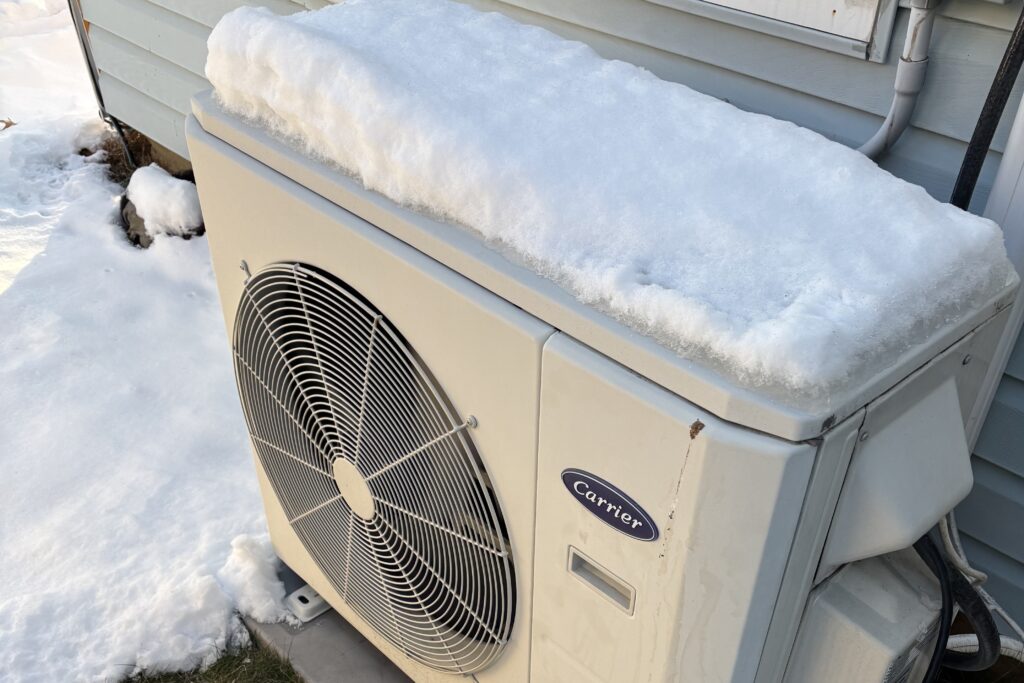
4. Can the outdoor AC unit cause poor cooling?
A blocked or dirty outdoor unit can make your AC struggle to release heat.
Look around the condenser outside. Grass clippings, leaves, shrubs, or debris can limit airflow. You can safely clear loose debris around the unit, but do not remove panels or wash electrical components.
Long Island homes near coastal areas may also see outdoor equipment wear from salt air over time. If the coil looks heavily packed with dirt or corrosion, that’s where a pro comes in.
5. Could ice on the AC mean something is wrong?
Ice on the indoor coil or refrigerant line is a sign your AC needs attention.
Ice can form when airflow is restricted or when refrigerant problems are present. Turn the system off and let it thaw. Do not chip ice away, because that can damage parts.
Safety note — if ice returns after a filter change and airflow check, schedule service. The cause may need diagnostic tools.
6. Does low refrigerant make an AC stop cooling?
Low refrigerant can make an AC blow warm air, but refrigerant work is not a homeowner repair.
Your AC should not “use up” refrigerant like fuel. Low refrigerant often points to a leak or another system issue. The licensed HVAC technicians ay Universe can test pressures, inspect for leaks, and recommend the right next step.
Do not add refrigerant yourself. It requires proper tools, handling, and system knowledge.
7. Can electrical problems make the AC run but not cool?
Electrical issues can keep part of the AC system from starting or cooling correctly.
Check the thermostat display and your electrical panel for a tripped breaker. If a breaker trips once, reset it one time. If it trips again, stop resetting it and call a professional.
Repeated breaker trips can point to a deeper issue. Universe also provides electrical services, which can help when an HVAC issue overlaps with home electrical concerns.
8. Is the AC too old or worn out to cool well?
An aging or frequently repaired AC may stop cooling well because key parts are worn, undersized, or inefficient for the home.
Repair may make sense when the issue is isolated and the system has been reliable. Replacement may be worth discussing when repairs are frequent, comfort is uneven, or the system cannot keep up during humid weather.
For Long Island homes with additions, older ductwork, or changed layouts, sizing matters. A right-sized recommendation should account for the home, not just the old unit’s label.
What can homeowners safely check before calling?
Homeowners can safely check settings, filters, vents, breakers, and outdoor clearance before calling.
Try this:
- Set the thermostat to cool and auto.
- Replace a dirty filter with the correct size.
- Open supply vents and clear return grilles.
- Clear loose debris around the outdoor unit.
- Check for a tripped breaker once.
- Turn the system off if you see ice.
When should you call a professional for AC repair?
Call a professional when the AC still blows warm air after basic checks, ice appears, breakers trip, airflow is weak, or the outdoor unit will not run.
You should also call if you hear grinding, buzzing, or repeated clicking. These signs can point to electrical or mechanical problems.
A technician can inspect the system, explain the issue in plain language, and walk you through repair options.
When should you repair vs. replace your AC?
AC repair is often the first discussion when the problem is limited; AC replacement becomes part of the conversation when comfort, reliability, or repeated repairs are concerns.
Ask these questions:
- Has the system needed frequent repairs?
- Are some rooms always too warm?
- Does the system run constantly in humid weather?
- Are major parts failing?
- Has the home changed since the system was installed?
Bottom line is, you do not have to decide alone. A clear HVAC visit should compare options, not push one answer.
What affects HVAC cost in New York and Long Island?
HVAC repair or replacement cost depends on the problem, parts, system size, access, electrical needs, refrigerant type, ductwork, and efficiency level.
For repairs, cost drivers may include:
- diagnostic time
- part availability
- labor
- whether electrical or airflow problems are involved
For replacement, cost drivers may include:
- equipment size
- efficiency
- ductwork condition
- installation access
- any needed electrical work
Are rebates or financing available?
Universe offers financing for both installations and service work for eligible customers.
Eligible homeowners may also qualify for current utility or efficiency incentives, depending on equipment and program rules. PSEG Long Island is the primary electric provider on Long Island, and usually offers rebates on equipment such as heat pumps, heat pump water heaters, and smart thermostats.
How can Universe help if your AC is not cooling?
If your AC is not cooling, start with the safe checks above. If the problem continues, let Universe take a closer look. The team serves Long Island homeowners in Nassau and Suffolk Counties and offers HVAC, plumbing, and electrical services.
Schedule service with Universe and get clear next steps for your home.
Frequently Asked Questions
Why is my AC not cooling on Long Island?
An AC may not cool on Long Island because of a dirty filter, blocked airflow, thermostat setting, frozen coil, refrigerant issue, electrical problem, or outdoor-unit blockage. Humid summers and coastal air can add strain to cooling equipment in some Nassau and Suffolk homes.
What should I check first if my AC is blowing warm air?
If your AC is blowing warm air, first check the thermostat, air filter, vents, return grilles, breaker, and outdoor unit clearance. These are safe homeowner checks. If warm air continues, the system may need professional diagnosis.
Is ice on my AC a serious problem?
Ice on an AC is a sign that airflow or refrigerant performance may need attention. Turn the system off and let the ice thaw. Do not chip it away. If ice comes back, schedule professional AC service.
Should I repair or replace my AC before summer?
AC repair may make sense when the problem is isolated, while replacement may be worth discussing if comfort is uneven or repairs are frequent. Long Island homes with additions, older ductwork, or heavy summer humidity should be evaluated carefully before choosing.