Spring is the right time to look for outdoor plumbing leaks before hoses, sprinklers, and exterior water lines start working harder. Outdoor plumbing leaks can hide after a Long Island winter because hose bibs, sprinkler lines, exterior pipes, and underground lines may not show damage until spring use begins.
For Long Island homeowners, wet spring weather, cold winter shifts, coastal air in some areas, and older suburban homes can make exterior plumbing worth checking early. The licensed plumbers at Universe are ready to help and offer 24/7 emergency plumbing service for when things go wrong at the worst time.
What outdoor plumbing issues show up seasonally?
Outdoor plumbing issues often show up in spring when homeowners turn hose bibs, irrigation systems, and exterior water lines back on.
Common spring trouble spots include:
- hose bibs
- outdoor faucets
- sprinkler heads
- irrigation valves
- exposed piping
- yard drains
- underground water lines
A faucet that seemed fine last fall can drip in May. A sprinkler zone may lose pressure. A soft area in the lawn may stay wet even after several dry days.
In short, spring gives you a chance to notice small problems before regular summer watering starts.
What signs mean a plumbing issue needs service?
An outdoor plumbing issue needs service when water keeps dripping, soil stays wet, pressure drops, or water appears near the foundation.
Look for these signs around the outside of your home:
- Dripping from a hose bib after the handle is off
- Water staining on siding or foundation walls
- Soft, soggy, or unusually green lawn areas
- Sprinkler heads with weak spray or bubbling water
- Puddles near exterior pipes, spigots, or irrigation boxes
- Running-water sounds outside
- A water bill or usage alert that rises without a clear reason
Good news is, you do not need to diagnose the full problem yourself. Your job is to spot the pattern and shut off water where you safely can. And then call Universe to handle the issue.
Which outdoor leaks do homeowners miss most often?
Homeowners often miss hose bib leaks, sprinkler leaks, underground line leaks, and water near exterior wall openings.
Hose bib leaks
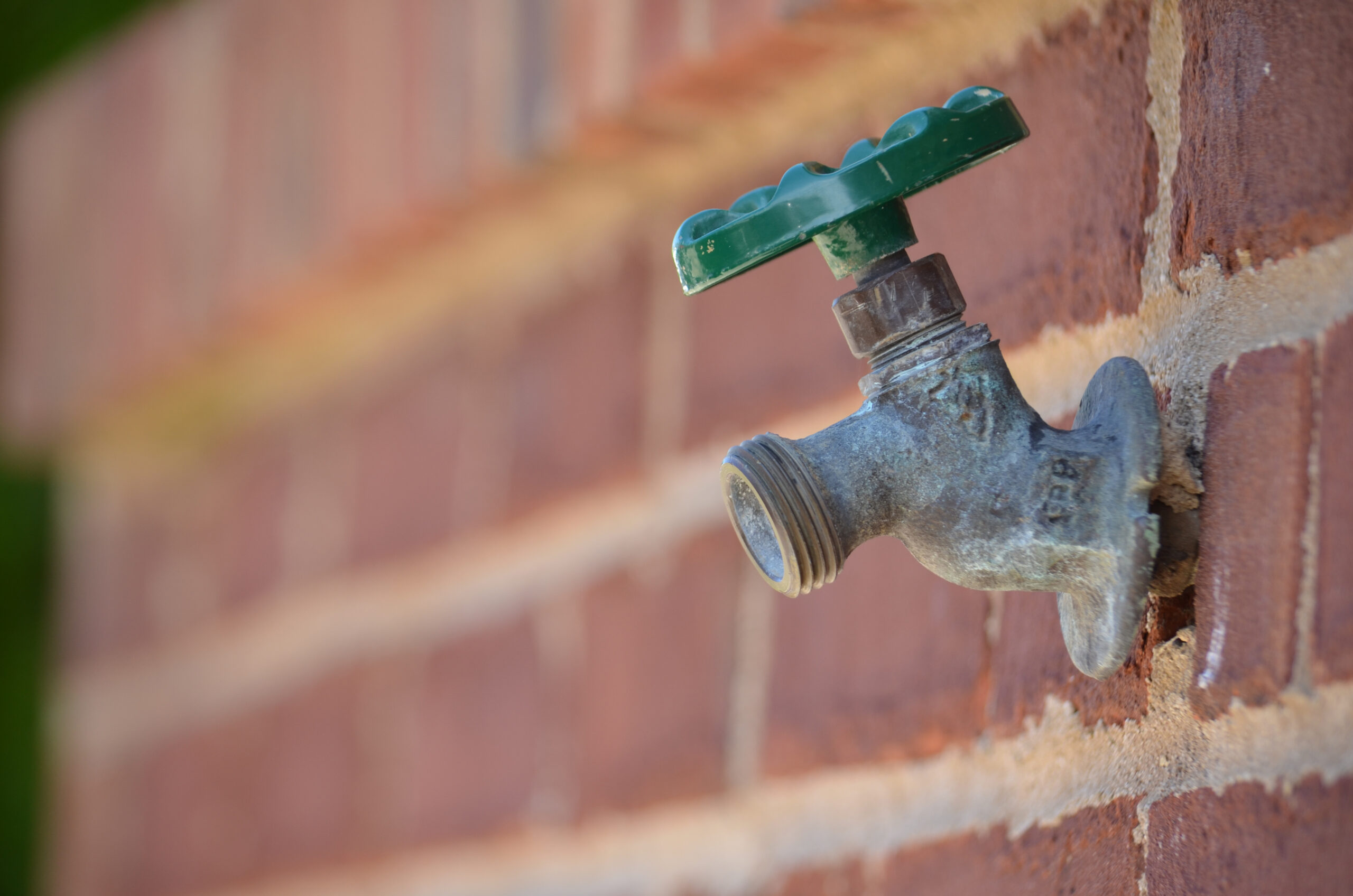
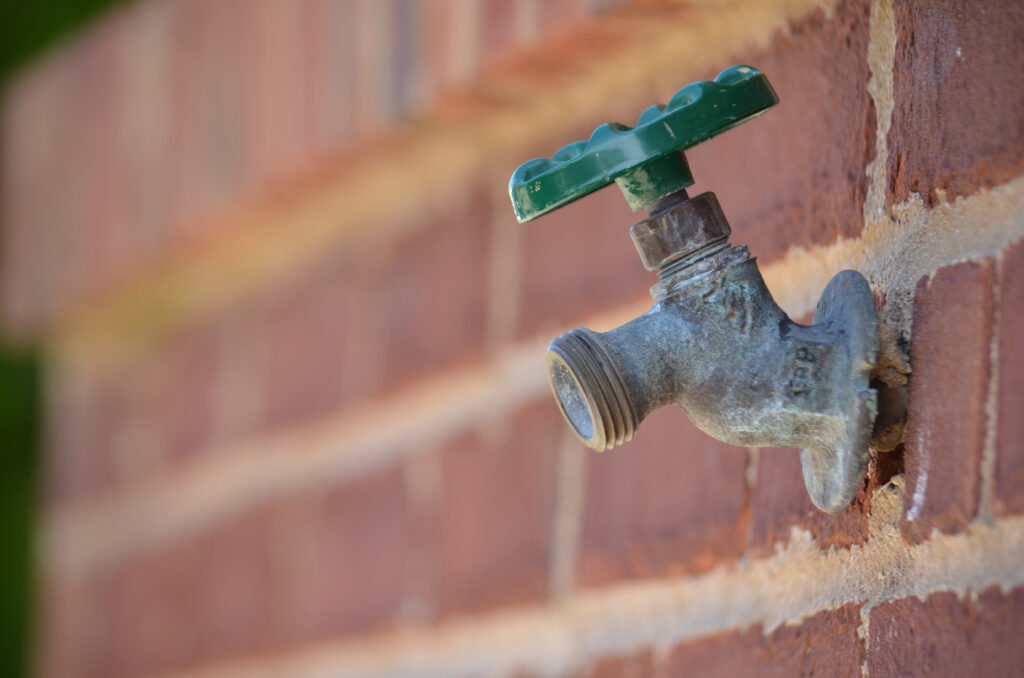
A hose bib (also known as a hose bib or sillcock) can leak from the handle, spout, hose connection, or pipe behind the wall. Connect a hose and turn the water on briefly. Watch the handle, wall area, and hose connection. If water appears near siding or inside the wall, stop using that faucet and schedule plumbing repair.
Sprinkler system leaks
Sprinkler system leaks may show up as weak spray, bubbling heads, soggy lawn areas, or pooling water. Run each zone briefly and walk the yard. Look for heads that do not rise, spray unevenly, or soak one area.
Underground water leaks
Underground leaks can be harder to spot. Soft lawn areas, wet spots, or running-water sounds may point to a leak outside. This is not a digging job for a homeowner. The plumbers at Universe can help determine whether the issue is irrigation, an exterior line, or another buried pipe.
Foundation-side leaks
Water near the foundation may come from a leaking hose bib, outdoor pipe, irrigation spray, or drainage issue. In older Long Island homes, small leaks near exterior wall openings may not look dramatic at first. Still, water near the home deserves attention.
What can homeowners check safely?
Homeowners can safely inspect visible outdoor fixtures, hose connections, sprinkler zones, damp soil, and water meter behavior without opening pipes or digging.
Try this simple spring plumbing maintenance checklist:
- Walk the outside of your home after a dry day.
- Check each hose bib with and without a hose attached.
- Look for wet siding, foundation stains, or dripping near exterior walls.
- Run each sprinkler zone briefly and watch for weak pressure or pooling.
- Check for soft soil or grass that stays greener than nearby areas.
- Turn off indoor and outdoor water use, then check whether the meter still moves.
- Shut off the affected fixture if water appears near the wall, foundation, or inside the home.
Safety note — do not dig around water lines, remove irrigation valves, or open walls to chase a leak. That’s where a pro comes in.
A mid-spring plumbing check can determine whether a small repair now may prevent a larger issue later. Schedule service now
When should you call a professional plumber?
Call a professional plumber when an outdoor leak:
- keeps running
- returns after shutoff
- affects water pressure
- appears near the foundation
- may involve underground piping
You should also call when a hose bib leaks from behind the wall, a sprinkler zone floods one area, pressure drops suddenly, or the water meter moves while fixtures are off.
When should you repair vs. replace outdoor plumbing?
Repair may fit a small fixture leak, while replacement may make sense for damaged hose bibs, aging outdoor pipes, or repeated failures.
A plumber may recommend repair when the leak is limited to a washer, seal, accessible connection, or fixture part.
Replacement may be more practical when the hose bib is cracked, the pipe behind the wall is damaged, the shutoff no longer works, or the same area keeps leaking.
Bottom line — the right answer depends on access, age, leak location, water pressure, and whether the issue is above ground or buried.
What affects plumbing cost?
Outdoor plumbing cost depends on:
- leak location
- pipe access
- parts
- excavation needs
- wall access
- fixture type
- whether the issue involves irrigation or a home water line
A visible hose bib repair is usually simpler than a buried line or a leak behind a finished wall. A sprinkler head issue may be different from a supply-line leak. In older Nassau and Suffolk homes, access through basements, crawlspaces, or finished areas can also affect the scope.
How can Universe help Long Island homeowners?
Universe can help Long Island homeowners identify the next step when an outdoor plumbing leak goes beyond a simple visual check.
If you find a dripping hose bib, wet soil, weak sprinkler pressure, or water near the foundation, shut off the affected fixture if you can do so safely. Then schedule plumbing service with Universe. The team serves Long Island homeowners across Nassau and Suffolk Counties.
Schedule service online with Universe and get clear plumbing guidance for your home
Frequently Asked Questions
What outdoor plumbing leaks do Long Island homeowners miss in spring?
Outdoor plumbing leaks Long Island homeowners often miss in spring include dripping hose bibs, sprinkler leaks, wet soil near buried pipes, and water near exterior walls. These leaks may become easier to notice once outdoor water use starts again.
How can I find outdoor water leaks around my home?
Homeowners can find outdoor water leaks by checking hose bibs, sprinkler zones, soft lawn spots, foundation edges, and water meter movement when fixtures are off. If water keeps moving or returns after shutoff, schedule plumbing service.
What are signs of a sprinkler system leak?
Sprinkler system leak signs include weak spray, bubbling heads, soggy lawn areas, water pooling, and zones that do not perform evenly. Run each zone briefly in spring and watch where water collects.
Is a leaking hose bib a plumbing problem?
A leaking hose bib can be a plumbing problem when water drips after shutoff, leaks from the wall, or appears inside near the fixture. A simple washer issue may be minor, but a wall-side leak should be checked by a plumber.
When should I call a plumber for an outdoor leak?
Homeowners should call a plumber for an outdoor leak when water keeps running, pressure drops, soil stays wet, or the leak may involve a buried line.